
TC4016 – SENT/PSI5 ECU Simulation Node with CAN FD and Multi-Channel I/O
The TC4016 Supports SENT and PSI5 sensor signal acquisition, integrated with 2-channel CAN/CAN FD, 4-channel Digital Input/Output (DIDO), and 3-channel Analog Input/Output (AIAO)
- ARM64 Linux: tsdev
- HarmonyOS: tsdev


Related Products
Related products
TC4016 Functions and parameters
The TC4016 is an ECU (Electronic Control Unit) simulation node based on SENT (Single Edge Nibble Transmission) and PSI5 (Peripheral Sensor Interface 5) protocols. It is capable of receiving sensor data from a wide range of devices with SENT and PSI5 interfaces.
The TC4016 integrates 2 channels of CAN/CAN FD, 4 channels of Digital Input/Output (DIDO), and 3 channels of Analog Input/Output (AIAO).
Connected to a PC via Ethernet, the TC4016 enables real-time monitoring, analysis, and simulation of SENT, PSI5, and CAN/CAN FD bus data. It provides a reliable data environment for R&D and testing personnel, significantly accelerating the development cycle.
The TC4016 supports secondary development through APIs available for both Windows and Linux platforms. It is compatible with various development environments such as C++, C#, LabVIEW, and Python, enabling seamless integration into a wide range of test systems with high efficiency and usability.
- Hardware-based message timestamping with microsecond-level accuracy, meeting advanced timing requirements
- Driver-free design for Windows, ensuring excellent compatibility
- 20 SENT channels, with the first 10 channels supporting SPC mode
- 16 PSI5 channels
- 2 CAN/CAN FD channels
- Supports 4 Digital I/O (DIDO) and 3 Analog I/O (AIAO) channels
- Configurable CAN bit rate from 125Kbps to 1Mbps; CAN FD supports up to 8Mbps
- Software-configurable 120Ω termination resistors for CAN channels
- Self-ACK (Self-Acknowledgment) support for CAN communication
- Hardware time synchronization across multiple devices
- Example project and API interfaces provided, simplifying secondary development
Pin Definition – PSI5 1/8 (DB15)
| Pin | Definition | Pin | Definition | Pin | Definition |
| PIN 1 | PSI5_1 | PIN 2 | DGND | PIN 3 | DGND |
| PIN 4 | DGND | PIN 5 | PSI5_5 | PIN 6 | PSI5_2 |
| PIN 7 | DGND | PIN 8 | DGND | PIN 9 | DGND |
| PIN 10 | PSI5_6 | PIN 11 | PSI5_3 | PIN 12 | PSI5_4 |
| PIN 13 | DGND | PIN 14 | PSI5_8 | PIN 15 | PSI5_7 |
Pin Definition – PSI5 9/16 (DB15)
| Pin | Definition | Pin | Definition | Pin | Definition |
| PIN 1 | PSI5_9 | PIN 2 | DGND | PIN 3 | DGND |
| PIN 4 | DGND | PIN 5 | PSI5_13 | PIN 6 | PSI5_10 |
| PIN 7 | DGND | PIN 8 | DGND | PIN 9 | DGND |
| PIN 10 | PSI5_14 | PIN 11 | PSI5_11 | PIN 12 | PSI5_12 |
| PIN 13 | DGND | PIN 14 | PSI5_15 | PIN 15 | PSI5_16 |
Pin Definition – SENT 1/10 (DB37)
| Pin | Definition | Pin | Definition | Pin | Definition |
| PIN 1 | SENT 1 | PIN 2 | GND | PIN 3 | VCC_5 V |
| PIN 4 | SENT 3 | PIN 5 | GND | PIN 6 | VCC_5 V |
| PIN 7 | SENT 5 | PIN 8 | GND | PIN 9 | VCC_5 V |
| PIN 10 | SENT 7 | PIN 11 | GND | PIN 12 | VCC_5 V |
| PIN 13 | SENT 9 | PIN 14 | GND | PIN 15 | VCC_5 V |
| PIN 16 | NULL | PIN 17 | NULL | PIN 18 | NULL |
| PIN 19 | NULL | PIN 20 | VCC_5 V | PIN 21 | SENT 2 |
| PIN 22 | GND | PIN 23 | VCC_5 V | PIN 24 | SENT 4 |
| PIN 25 | GND | PIN 26 | VCC_5 V | PIN 27 | SENT 6 |
| PIN 28 | GND | PIN 29 | VCC_5 V | PIN 30 | SENT 8 |
| PIN 31 | GND | PIN 32 | VCC_5 V | PIN 33 | SENT 10 |
| PIN 34 | GND | PIN 35 | NULL | PIN 36 | NULL |
| PIN 37 | NULL |
Pin Definition – SENT 11/20 (DB37)
| Pin | Definition | Pin | Definition | Pin | Definition |
| PIN 1 | SENT 11 | PIN 2 | GND | PIN 3 | VCC_5 V |
| PIN 4 | SENT 13 | PIN 5 | GND | PIN 6 | VCC_5 V |
| PIN 7 | SENT 15 | PIN 8 | GND | PIN 9 | VCC_5 V |
| PIN 10 | SENT 17 | PIN 11 | GND | PIN 12 | VCC_5 V |
| PIN 13 | SENT 19 | PIN 14 | GND | PIN 15 | VCC_5 V |
| PIN 16 | NULL | PIN 17 | NULL | PIN 18 | NULL |
| PIN 19 | NULL | PIN 20 | VCC_5 V | PIN 21 | SENT 12 |
| PIN 22 | GND | PIN 23 | VCC_5 V | PIN 24 | SENT 14 |
| PIN 25 | GND | PIN 26 | VCC_5 V | PIN 27 | SENT 16 |
| PIN 28 | GND | PIN 29 | VCC_5 V | PIN 30 | SENT 18 |
| PIN 31 | GND | PIN 32 | VCC_5 V | PIN 33 | SENT 20 |
| PIN 34 | GND | PIN 35 | NULL | PIN 36 | NULL |
| PIN 37 | NULL |
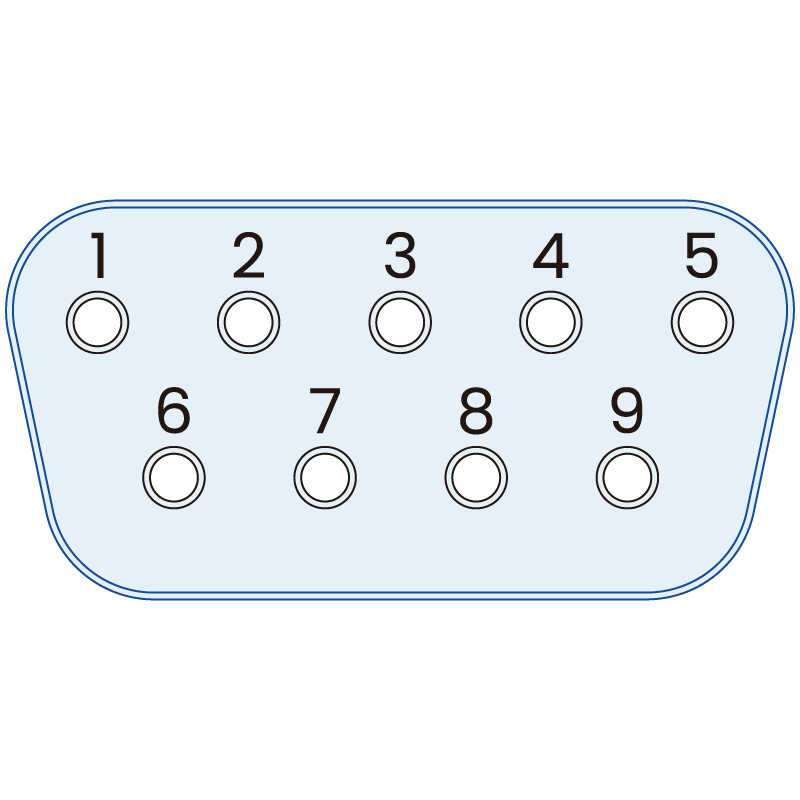
I/O
- Pin 1 DIDO 1
- Pin 2 DIDO 3
- Pin 3 DGND
- Pin 4 AIAO 1
- Pin 5 AIAO 3
- Pin 6 DIDO 2
- Pin 7 DIDO 4
- Pin 8 AGND
- Pin 9 AIAO 2
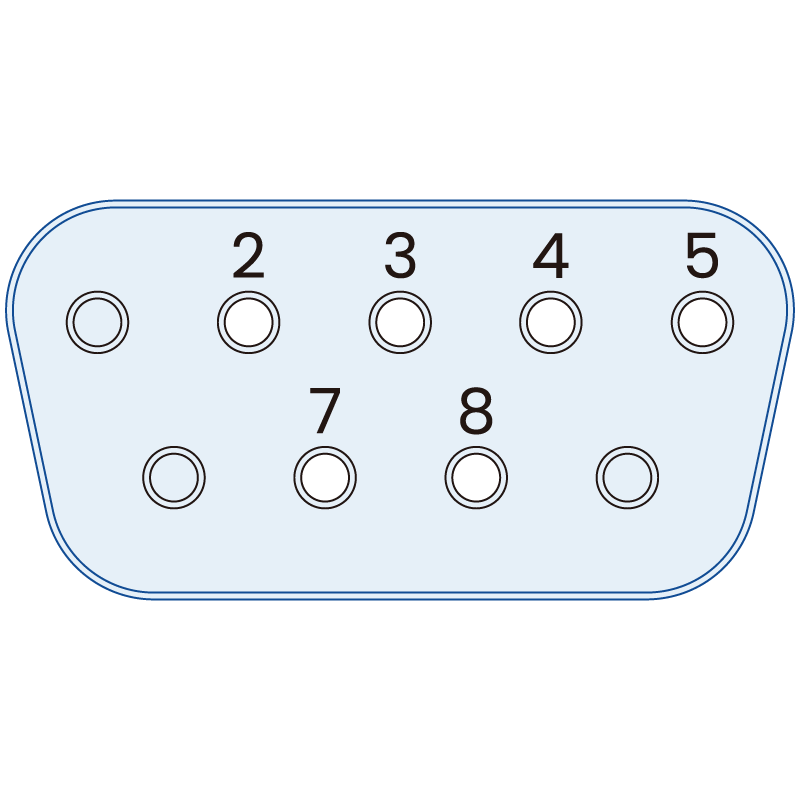
CAN FD 1/2
- Pin 2 CAN 1_Low
- Pin 3 DGND
- Pin 4 CAN 2_Low
- Pin 5 Shield
- Pin 7 CAN 1_High
- Pin 8 CAN 3_High
Typical applications
- CAN FD Simulation and Testing
- Supports receiving SENT and PSI5 signals
- Hardware-in-the-Loop (HIL) Testing for ECU
- Multi-channel I/O Control Scenarios
- Integration with Laboratory and Production Line Test Platfom
Specification
| Channel | 2 x CAN/CAN FD / 4 x DIDO / 16 x PSI5 |
|---|---|
| PC Interface | Gigabit Ethernet |
| Driver | Driver-free for Windows |
| Timestamp Precision | 1 µs hardware message timestamp |
| Terminal Resistor | 120 Ω software-configurable termination resistors |
| Isolation (CAN) | CAN channels support DC 2500V galvanic isolation; ESD protection compliant with ±8 KV contact discharge, ±15 KV air discharge |
| DIDO | Digital Input (DI) voltage range: 0 ~ 39.5 V |
| AIAO | Analog Input (AI) voltage range: 0 ~ 39.5 V |
| SENT | Idle polarity: High |
| PSI5 | Channel modes: Synchronous / Asynchronous |
| Power Supply | DC 9 ~ 32 V |
| Power Consumption | 5 W (without external sensor connection) |
| Enclosure Material | Aluminum alloy enclosure |
| Dimensions | Approx. 110 x 70 x 36 mm |
| Weight | Net weight: approx. 150 g ; Gross weight: approx. 368 g |
| Operating Temperature | -40°C ~ 80°C |
| Operating Humidity | 10% ~ 90% (non-condensing) |
| Operating Environment | Keep away from corrosive gases |
During operation, make sure to correctly connect the power lines and avoid frequent plugging and unplugging.
